
Projects
featured Projects
Here is a sampling of some of the projects we’ve done over the years
Air-in-Line Tester
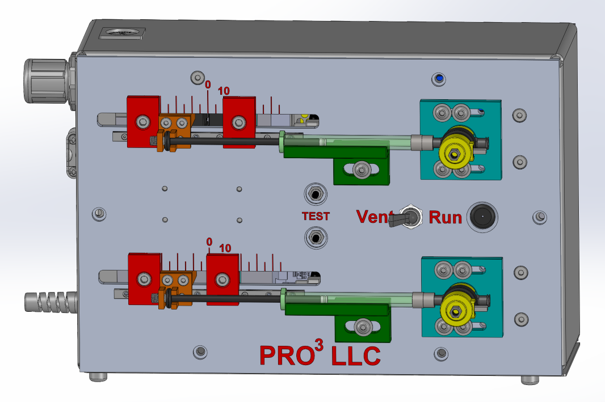
Research fixture built for injecting air into a fluid line. Air detection in medical infusion pumps is critical for patient safety. Characterization and calibration of these sensors requires injecting precise volumes of air into the fluid line before the sensor. Historically this testing was done manually with precision glass syringes, which was slow and subject to operator variability. To speed the process a machine was developed to repeatedly inject a preset volume of air. Combined with a datalogging system and some custom test scripts (developed in Python), a more automated system was implemented. This saved the customer valuable development time and increased test data reliability.
Syringe Loading machine
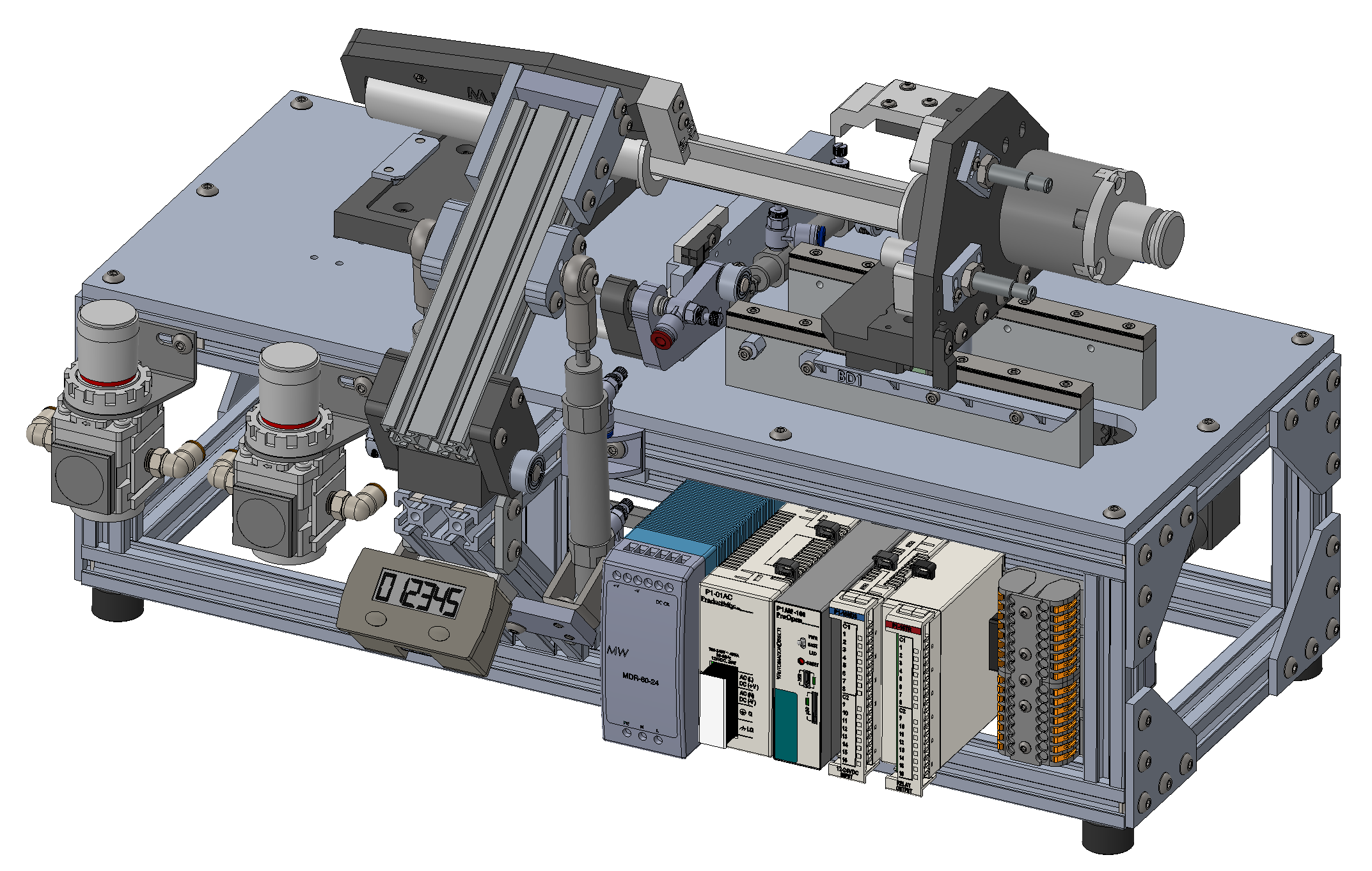
One of our long time customers needed a machine to help them test mechanical durability of a syringe pump. A major challenge of this machine was that it needed to accommodate different sizes of syringes, from 60mL down to 1mL. Interchangeable holders were designed to allow for the different travel lengths and positioning of each syringe. Proximity sensors were used for feedback, with adjustable end positioning stops to ensure the movements were actually made as needed. Having custom mechanical pieces for each syringe type allows the operator to quickly switch between syringe types without a different PLC program. It also allows the syringes to be changed as often as necessary based on test requirements.
Movement is produced by air cylinders that are orchestrated by an Arduino based PLC. Being based on Arduino allows the customer to make changes to the movement sequence without learning complicated and proprietary PLC software or arcane ladder logic.
Pump door durability tester
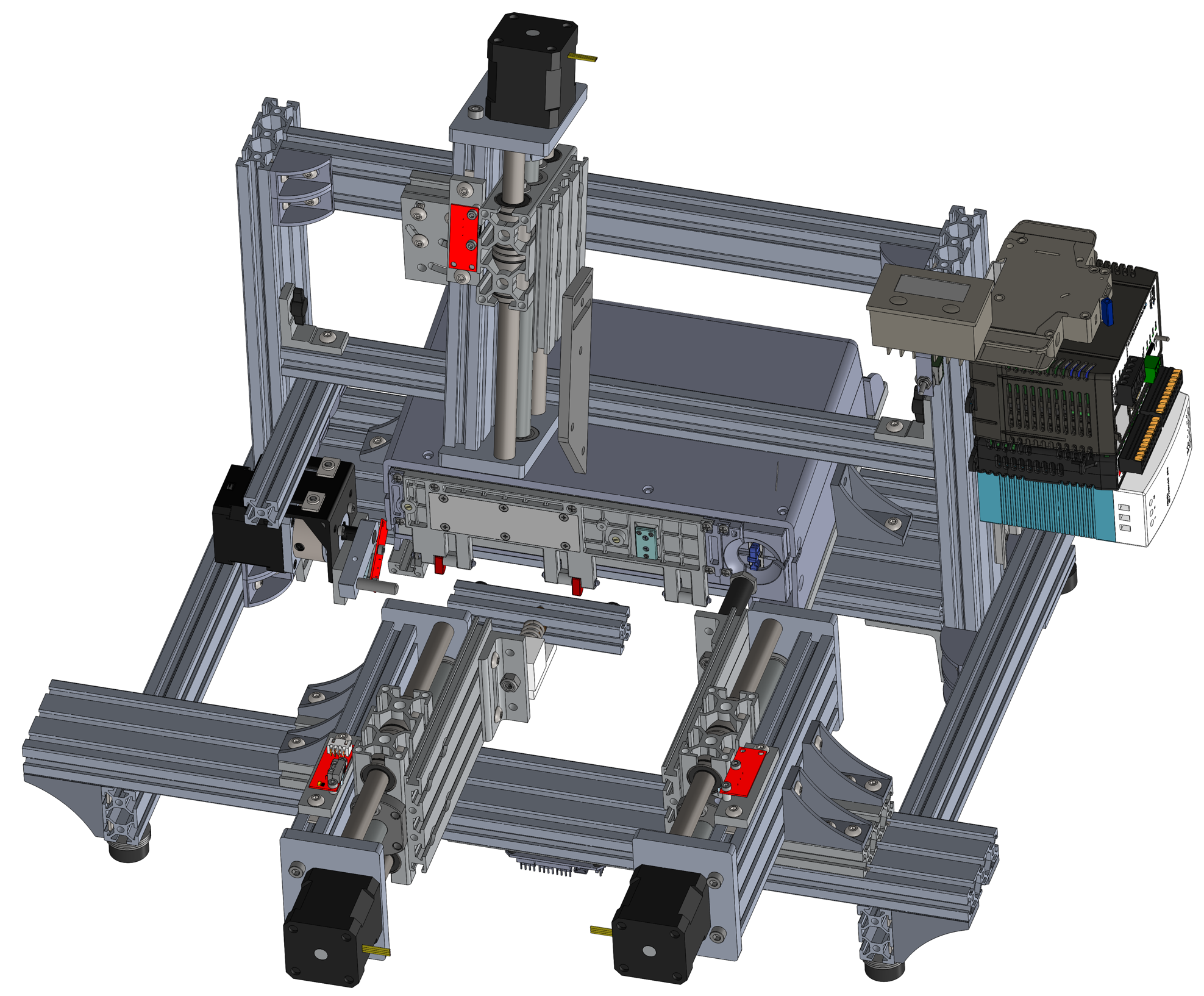
Development machine built for cycle testing a door on a medical device. Proper operation of the door on this device is critical for it’s operation. In order to ensure design robustness after years of use, this machine was developed to exercise the door components in a faster and more repeatable way than a human operator could do.
Machine is controlled via PLC (programmable Logic Controller) with stepper motors driving linear slides for movement. Performed cycles are counted with an electronic counter.
Switch Tester
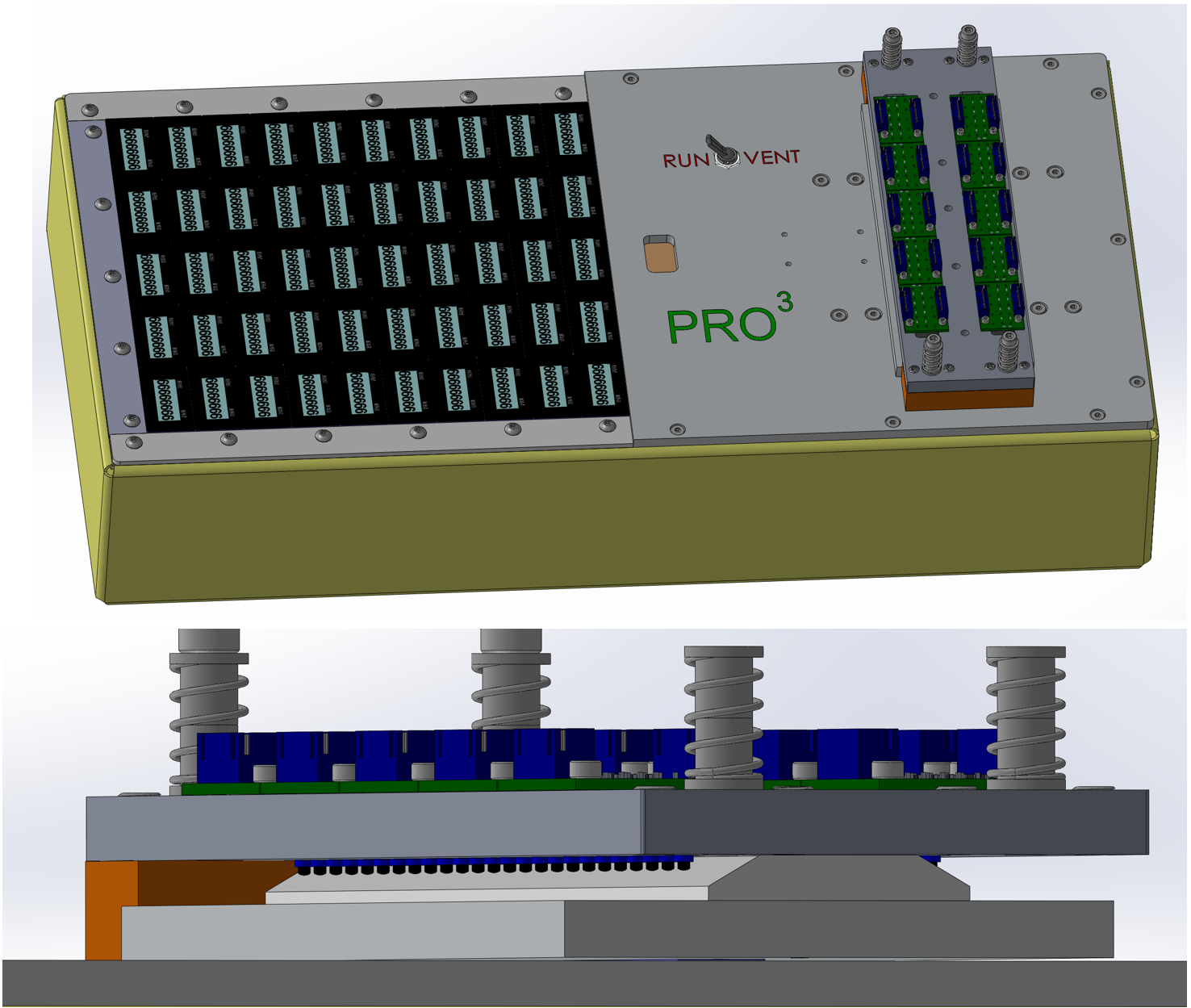
Machine built for testing a pushbutton microswitch used on medical device. Due to being used in a medical device, the durability testing needed was beyond what was provided by the manufacturer.
Up to 50 switches cycled at a time.
Robot test rack
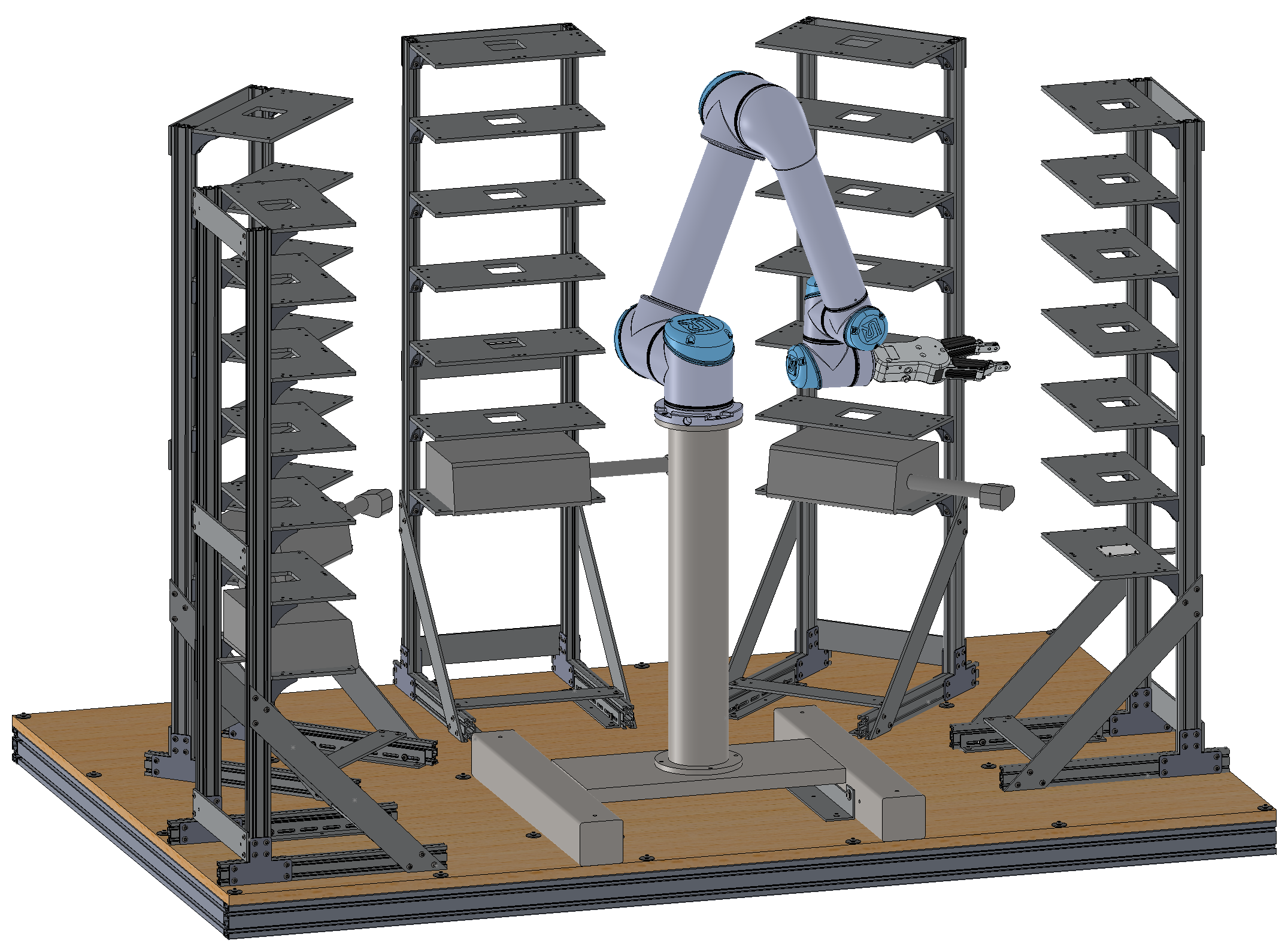
One of our long time customers was looking to explore ways to automate their testing using a programmable robot arm. They had their own robotics expert to program the arm, but needed a custom designed rack system to hold the devices under test. A group of shelving units was devised to fit the desired number of devices around the robot arm in the most efficient way possible.
The test setup worked so well that two more were built not long after the first. The first setup was built almost 10 years ago and all three are still in use today. These have not only saved the company significant time and money, but have also increased data quality by eliminating error prone manual testing.
Automated syringe Filling machine
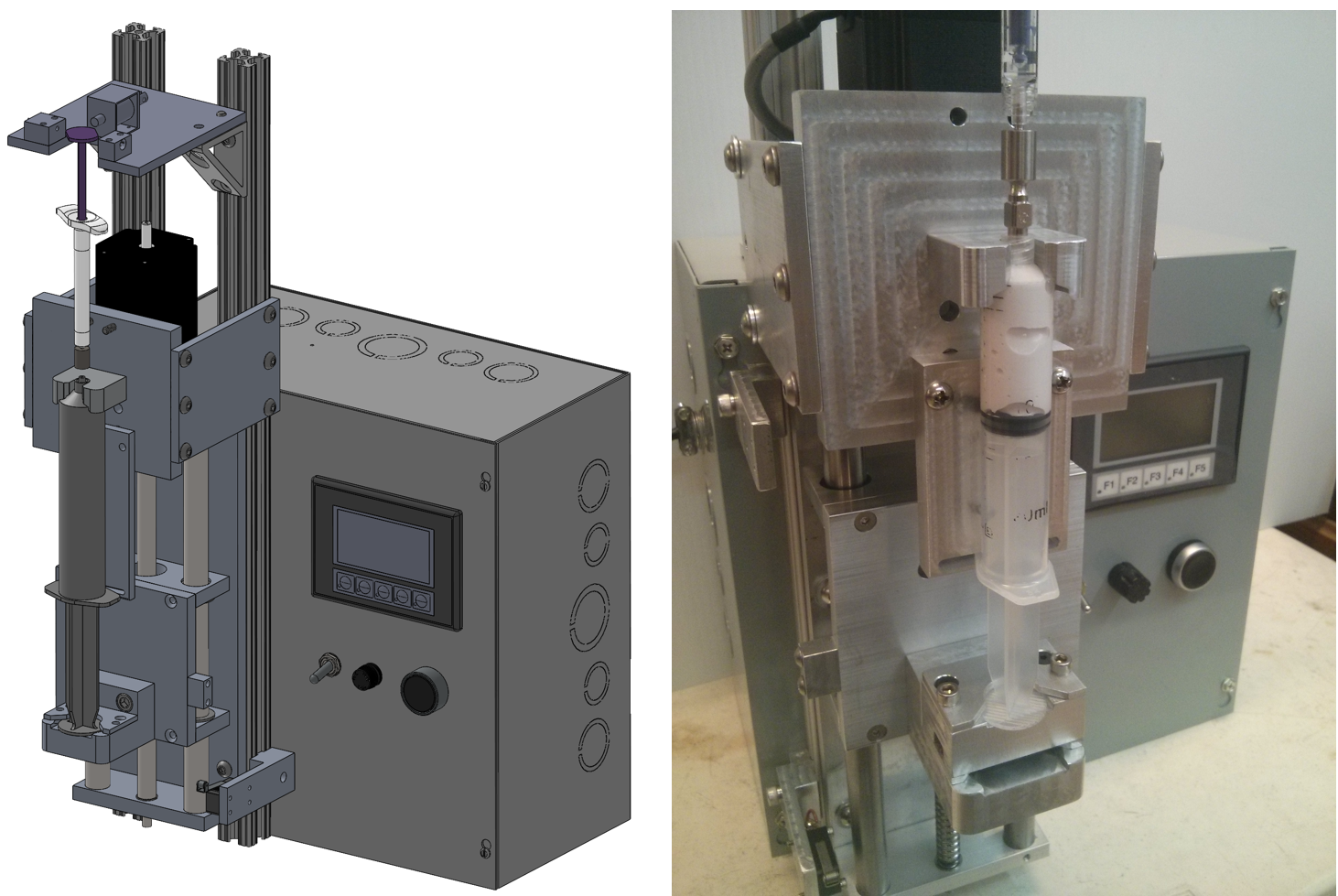
This machine was developed for one of our clients in the medical aesthetics business. The challenge was to build an automated machine to fill one-time use syringes from a larger syringe containing a dermal filler. Other available devices on the market didn’t fit their needs or budget, so they contacted us to build a custom machine
Design goals for this machine included:
connector cycler
This is a machine built for cycling a connector. Because the connector was being used on a medical device, durability testing needed to be conducted beyond what was provided from the manufacturer.
Analytical balance Modification
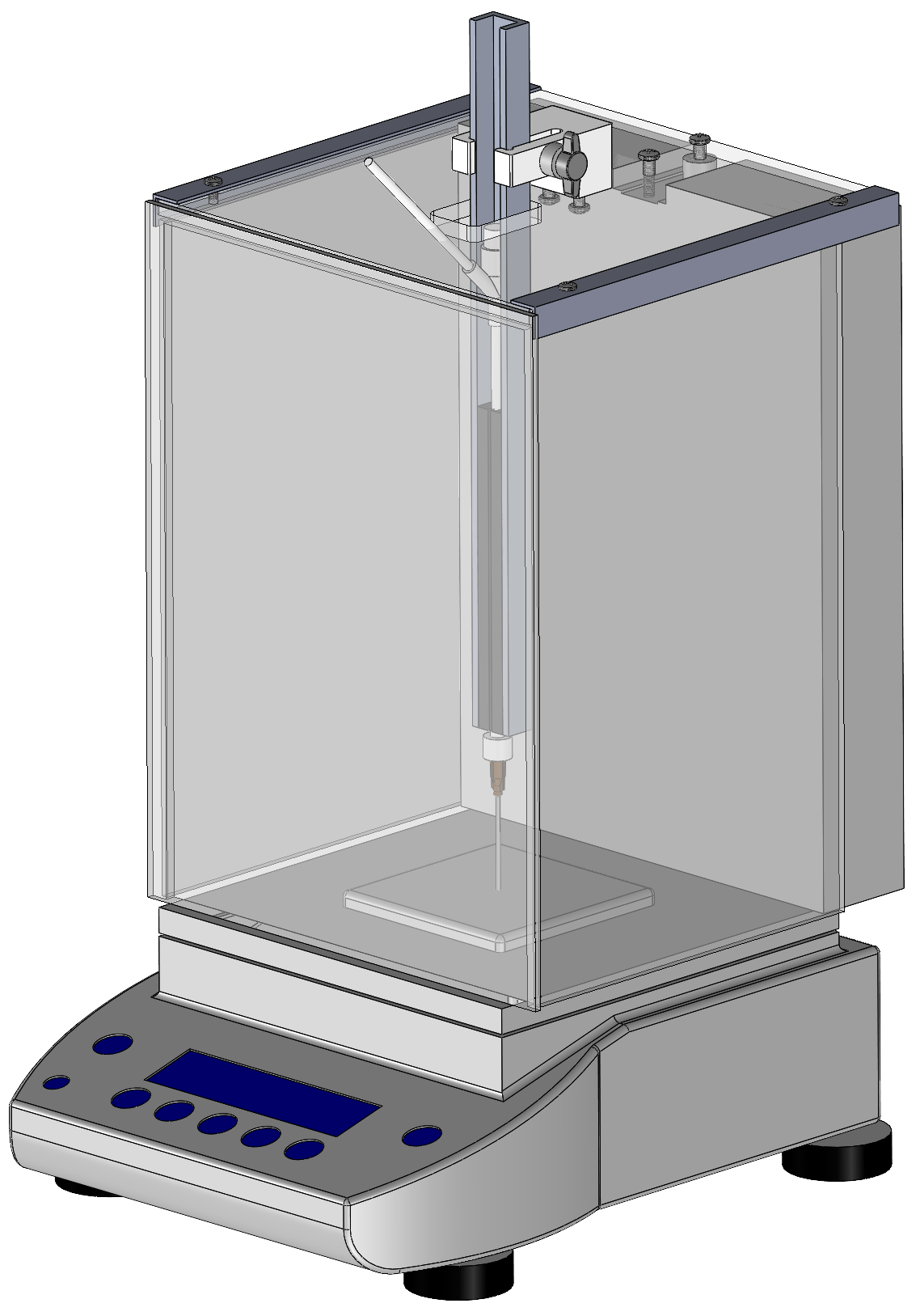
Some problems don’t need a completely bespoke testing solution, but just an extension to an existing one. A common test need in the medical device industry is fluid pump flow rate testing. This is typically done by using analytical balances with a data logging system to monitor the mass of fluid dispensed into a weighing cup. Testing at low flow rates is especially challenging as it requires high precision enclosed balances to minimize noise in the data from air currents and vibration. To achieve maximum isolation of the weighing cup, the fluid line and dispensing needle need to be suspended over the cup. Off-the-shelf balances don’t have provisions for this type of testing, so something needed to be built.
Custom tops were made with a sliding aluminum channel that the fluid line and dispensing needle could be attached to. A clamp on the top allows the channel to slide up and down to accommodate different size weighing cups, or to be removed completely for easy attaching of the fluid line and needle. The existing sliding side doors of the balance are maintained for access to the weighing cup. To date the customer has over 100 of these balance setups in use.
assembly clamps
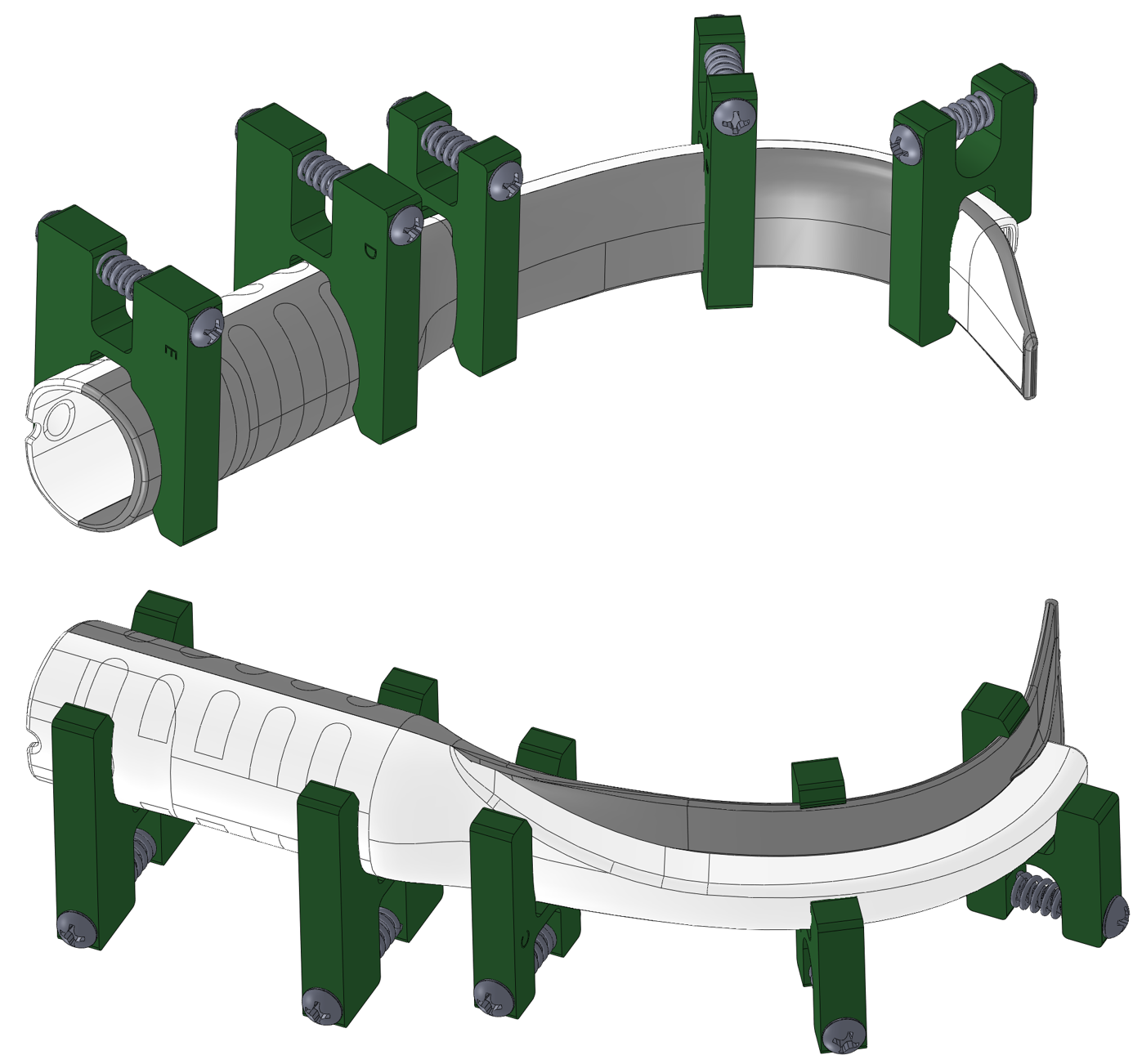
A contract mfgr was tooling up an assembly line and needed a solution for holding two plastic pieces together while an epoxy adhesive was curing.
A series of spring-loaded plastic clamps were developed to hold the pieces together. Plastic was preferred to not mar the surface of the pieces. Material selection was a challenge because the curing process was done in a conveyor oven at higher temperatures than many plastics can survive. The clamps also needed to be durable enough to retain their clamping ability for many heat cycles, yet not so expensive that the material used would be cost prohibitive. Ultimately an oil-filled Nylon was chosen as it provided the best performance and value. This production technique has been in successful use since 2011.
assembly clamps improvement
Sometimes it’s the little things that matter.
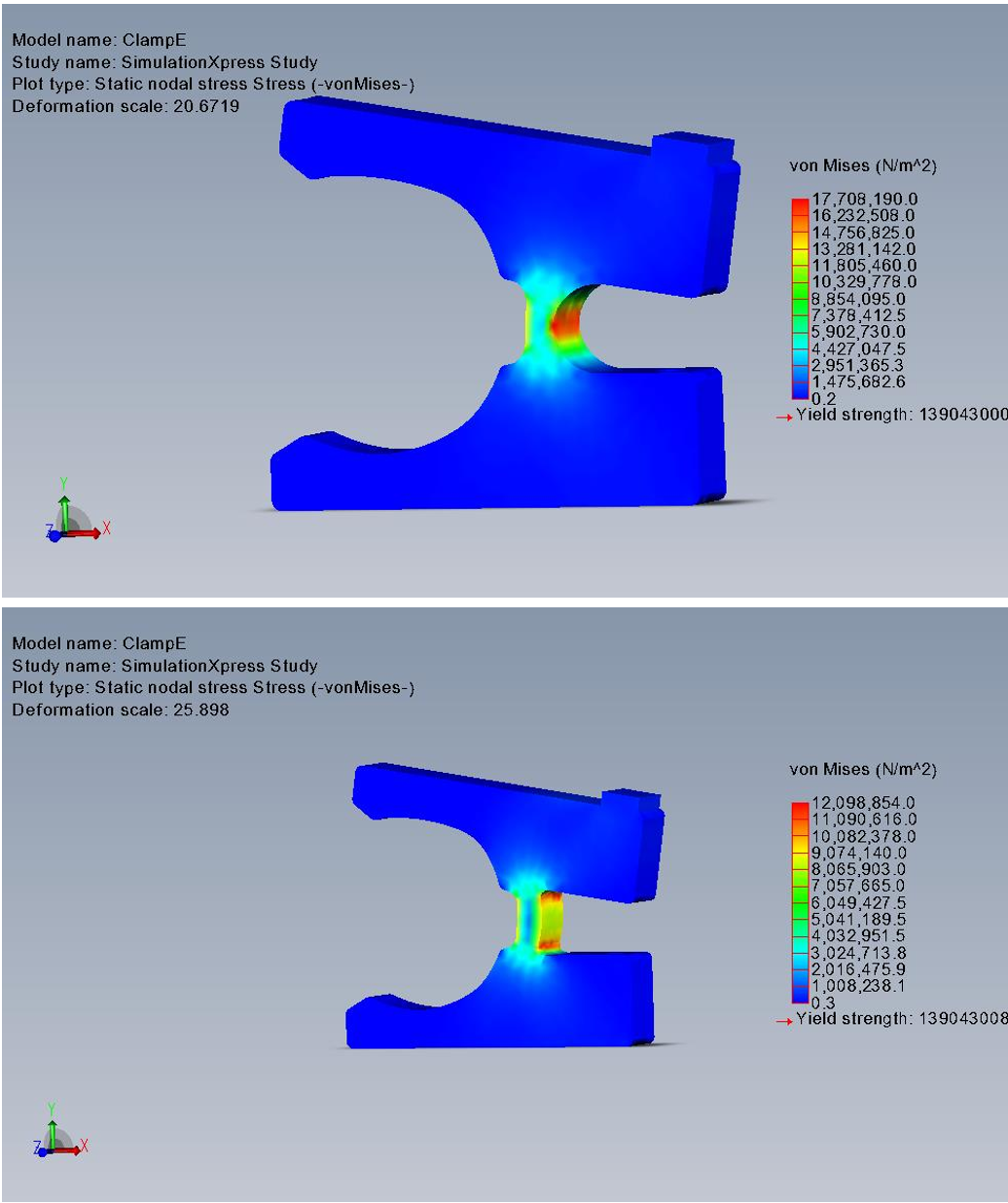
We had built a number of plastic clamps for a production line operation. After a year or two of use some of the clamps were breaking. To keep replacement costs down the customer wanted to see if we could make the clamps more durable.
Stress analysis was performed on the design, and it was discovered that there was indeed a stress concentration right where the parts were breaking. A few design changes were simulated, and interestingly the one that looked the best was the one that removed material from the stressed area. It seemed counterintuitive that making a part thinner would increase its durability, but it worked by lengthening the area of the part that was required to flex. This effectively spread out the stress over more material, so that no single area would be stressed beyond an acceptable level.
Replacement clamps using the new design did indeed last longer in production.
pump testing equipment
Test equipment doesn’t have to be complicated.
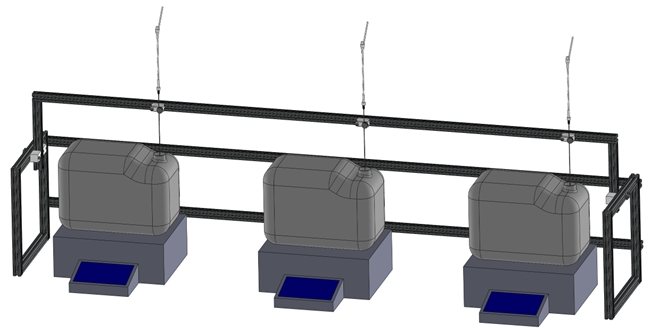
A method was required for suspending fluid dispensing needles above weighing scales, to facilitate flow rate testing of a new fluid pump.
A simple frame was built using t-slotted aluminum extrusions, which allowed for easy and flexible mounting of custom designed cannula holders. The frame and holders can be easily moved to accommodate different sized containers and scales.
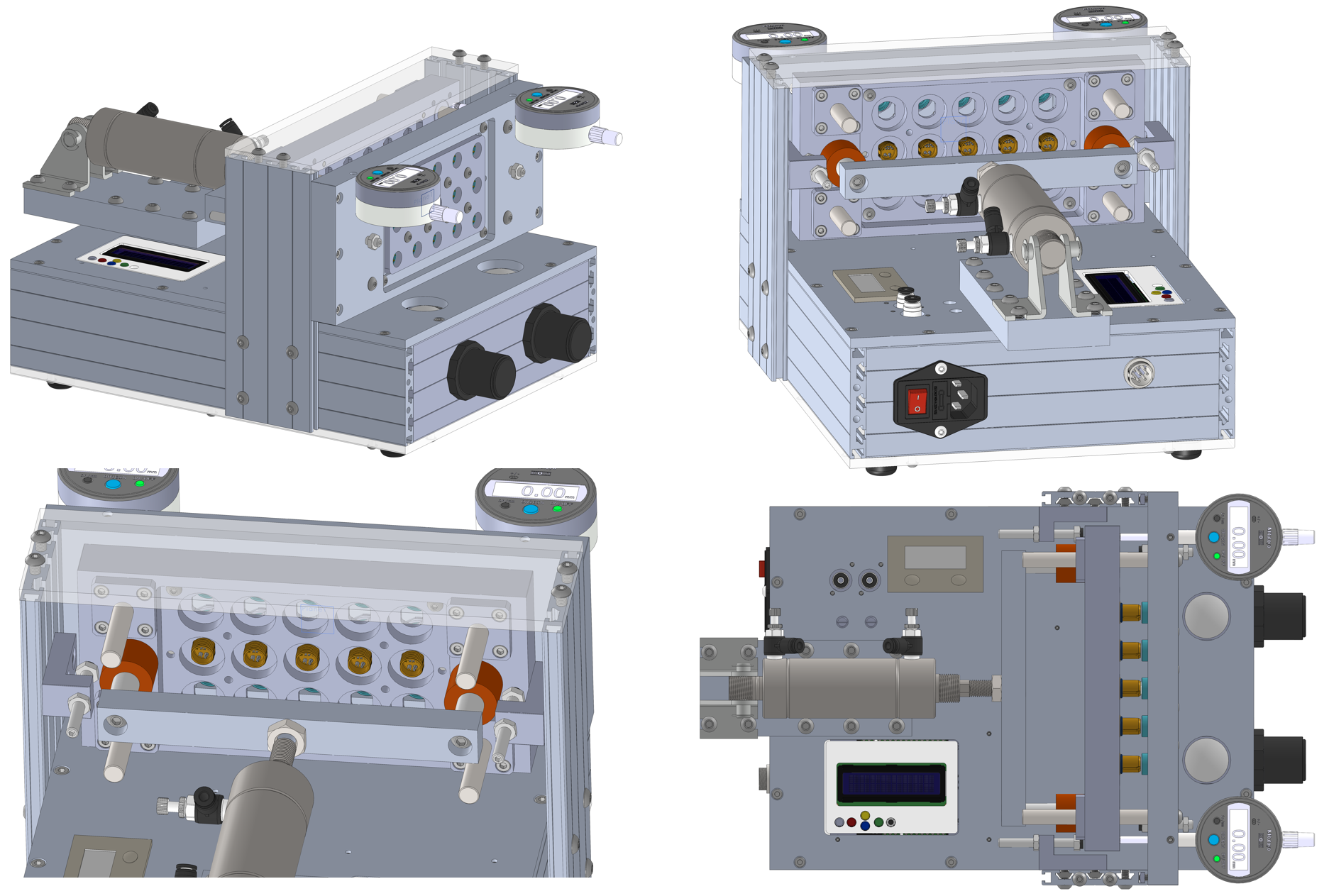
linear peristaltic gap testing
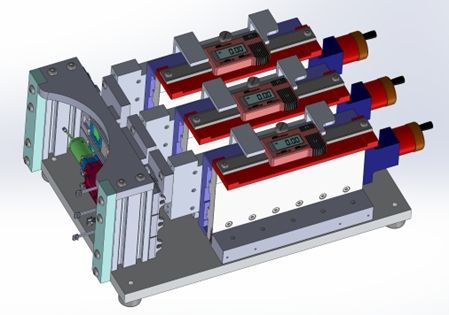
This is a research fixture built for testing peristaltic pump characteristics. With any peristaltic pump, the amount of tubing compression during pumping is critical for proper operation. This fixture was designed to precisely position a fixed “anvil” against which tubing is compressed to create the pumping action. This allowed the customer to optimize pump design for more efficient operation.